Figure Skating Gold Medalist Breaks Boundaries


Alysa Liu is helping break the boundaries of what it means to be a figure skater. For years, the sport has been shaped by strict and conservative expectations of what a “figure skater” should look like and how they should behave.
Through her self-advocacy, revolutionary mindset, and alternative style, Liu is paving the way for a new generation of athletes.
Liu’s career is a comeback story for the ages. Winning Olympic gold in figure skating is a monumental achievement on its own. Winning it after stepping away from the sport for two years was thought to be impossible.

Even Liu’s coach—along with many others in the skating community—doubted whether a comeback would succeed. Liu, however, never doubted her own abilities.
She began figure skating at the age of five and quickly emerged as a prodigy. At just 12 years old, she made history at the 2018 Asian Open by becoming the youngest woman to land a triple Axel in an international competition. A year later, she became the youngest U.S. women’s champion. Liu also became the first American woman to land a quadruple Lutz in competition.
After competing at the 2022 Beijing Winter Olympics, Alysa decided to retire. She announced this to the public through an Instagram post. At the time, she explained that skating no longer felt like it belonged to her.
High-level figure skating is often shaped by strict, authoritarian coaching styles, and Liu had experienced that pressure for years. In her 60 Minutes Interview with CBS, it was revealed that her father would even bring a radar gun to practice while watching her train, monitoring how fast she was going. After growing up in a world of constant training and competition, she had never truly experienced a break from the sport. Stepping away became necessary for her well-being.
During her time away from skating, Liu finally had the freedom to explore life beyond the rink. She began attending UCLA, got her driver’s license, traveled to Nepal, experimented with her alternative fashion style, and got to spend more time with friends.
So what brought her back?
While on a ski trip with friends, Liu felt the same rush of adrenaline she once experienced on the ice. That moment reignited her love for skating. Soon after, she called her coach and told him she wanted to compete again. On March 1, 2024, she officially announced her return to the sport.
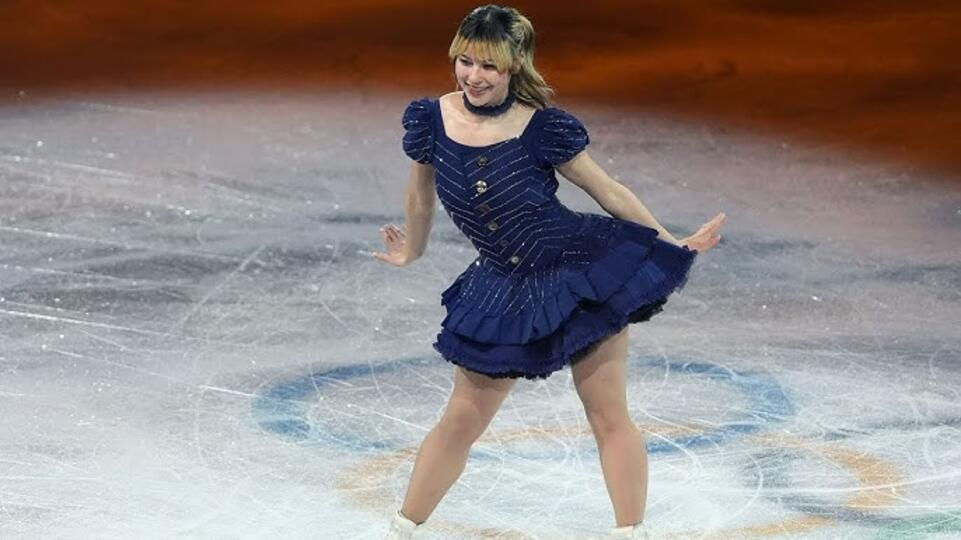
Since her comeback, Liu has become an outspoken advocate for skaters’ autonomy. She frequently speaks about the pressures athletes face, particularly regarding body image and food restrictions. In figure skating, many athletes—especially young ones—are pressured into restrictive eating habits under the belief that a lower body weight makes jumps easier.
In an interview with Elle Magazine, Liu described the messages she heard growing up. “Ever since I was a kid, I was told stuff like, ‘Don’t eat that,’” she said. “You can’t drink water even, because of water weight. Imagine telling a 13-year-old that they can’t drink water because of water weight.”

Another one of Liu’s statements has become widely quoted among skating fans and athletes alike: “No one’s going to starve me or tell me what I can or can’t eat.”
Her words resonate far beyond the skating world. In many sports, athletes are pressured to tightly control their weight, sometimes at the expense of their health. These constant expectations can cause young competitors to lose their love for the sport they once enjoyed. Liu understands that experience firsthand. Yet if you watch her performances since returning to the ice, you'd never guess it. Her programs are filled with visible joy and freedom.
That joy likely comes from the fact that Liu returned to skating on her own terms. She got to have say on her program costumes, music, and choreography—giving her the freedom to showcase her alternative style.

Her comeback results quickly proved that the time away had not diminished her skill. At her first competition back—the 2024 CS Budapest Trophy—she won gold. She continued to perform consistently well throughout the following season. Before the Olympics, Liu captured another major victory at the 2025 World Figure Skating Championships in Boston, where she placed first in both the short program and the free skate.
Then came the moment that cemented her comeback: winning gold at the 2026 Winter Olympics in Milan. But Liu’s influence goes beyond medals.

Clips from her interviews have gone viral on social media, with fans drawn to her refreshing perspective on competition. In one interview, Liu said, “I don’t need a medal. What I needed was the stage—and I got that.” It’s a mindset that resonates far beyond figure skating. Whether in sports, theater, speech, dance, or any other activity, focusing on the experience rather than the outcome can change how people perform.
When the goal becomes doing the thing you love instead of simply winning, the pressure begins to fade. And when the fear of losing disappears, athletes are often able to perform at their very best.
Alysa Liu’s career proves that sometimes stepping away from something can help you rediscover why you loved it in the first place. Liu didn't just return to skating; she returned on her own terms. In a sport with rigid expectations, Alysa has shown success doesn't have to come at the cost of autonomy.
With her stunning self-love, self-advocacy, and self-confidence, the next generation of skaters have been gifted a revolutionary role model.


Comments