Artemis II: Creating History

Updated: Apr 20
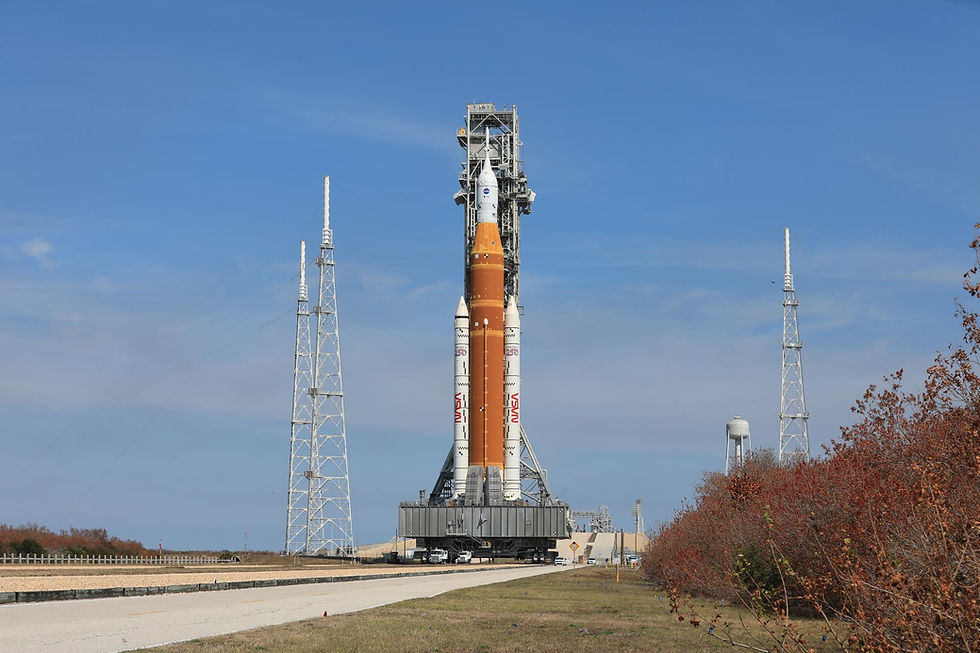
Over 50 years after the Apollo era, NASA has sent people back to the moon with the Artemis II mission. Artemis II is the first Artemis mission with crew members and shows just how far we have come with space exploration, science, technology, and representation.
What is Artemis ll?

Artemis II is a 10-day mission that sends astronauts around the Moon and back to Earth aboard the Orion spacecraft. It is the first time we have been able to travel below Earth's orbit since Apollo 17 back in 1972. NASA used the mission to test the spacecraft's safety, ability to support life, and overall performance before future moon landings. The four astronauts sent to space include Reid Wiseman (mission commander), Victor Glover (pilot, Christina Konch (mission specialist 1), and Jeremy Hansen (mission specialist 2). While all Apollo astronauts were white men, this mission focuses on showing diversity. This crew is a modern example of representation, with some on social media saying what a positive influence it was having Konch on the mission as a woman.
Artemis II and Past Missions
The most well-known missions were from the Apollo program, which occurred in the 1960s and 1970s. The Apollo 11 mission landed the first ever humans on the moon in 1969, while more recent missions are focused more on scientific exploration. Modern technology is used in the Artemis II spacecraft and contains computers, communication systems, and an advanced design that took years to calculate and construct. Also, while Apollo was more focused on landing on the moon, Artemis focuses more on researching if humans would be able to live there. NASA is using this mission as a way to prepare and learn for potential Mars missions.
Why This Mission Matters
Artemis II is a test that prepares NASA for future landings and long-term life on the Moon. Scientists want to learn more about the moon's south pole, since water or ice may exist there. The water there could someday provide astronauts with drinking water, oxygen, or even rocket fuel. This mission also helps to advance navigation, protection against radiation, and the ability to support life off of Earth. The help of these advancements might someday help humans to travel deeper into space.
Women in Space Exploration
One of the historic parts of this mission is Christina Konch, who is the first woman ever assigned to a mission like this. She also previously set the record for the longest spaceflight by a woman and led the first all-woman spacewalks. She is a showcase of how powerful women are, since only men were allowed on the early Apollo missions. Women now work for NASA as astronauts, engineers, launch directors, and mission leaders. Overall, Artemis II is one of the most important space missions in current times. It helps honor the achievements of the Apollo missions with a combination of modern technology. The mission also symbolizes progress for diversity in space exploration. This mission is the next big step in space exploration.
Works Cited
NASA. “Artemis II - NASA.” Nasa, 25 July 2024, www.nasa.gov/mission/artemis-ii/.
---. “Christina Koch - NASA.” Nasa.gov, www.nasa.gov/people/christina-koch/.
“NASA’s Artemis II Mission Leaves Earth Orbit for Flight around Moon - NASA.” NASA, 3 Apr. 2026, www.nasa.gov/news-release/nasas-artemis-ii-mission-leaves-earth- orbit-for-flight-around-moon/.


Comments