Think You Could Chase Storms Like in Twisters? Start in the Quad Cities!

Living in Tornado Alley, we’re all familiar with what spring brings: tornado season. And with tornado season comes the urge to rewatch Twisters (2024)—or Twister (1996), if you prefer the classic—and imagine yourself chasing storms like Glen Powell.
But what if you didn’t have to imagine? What if you could actually do it—right here in the Quad Cities?
The National Weather Service (NWS) Quad Cities office offers Storm Spotter Training Sessions, giving everyday people the chance to safely and responsibly get involved in severe weather tracking.

What Is a Storm Spotter?
Storm spotters provide on-the-ground reports during severe weather. Instead of relying only on radar, meteorologists depend on real people to confirm what’s actually happening—like hail size, damaging winds, or rotating clouds.
These reports are sent directly to the NWS and help improve warnings, making them more accurate and timely for the public.
My Experience
I attended a storm spotter training session and became a certified Skywarn Storm Spotter. During the training, I learned how much preparation and awareness goes into spotting safely and effectively.

Staying Weather-Aware
Storm spotters don’t just go outside when it storms—they prepare in advance. The NWS releases outlooks that predict where severe weather is most likely to occur days ahead of time. One of the most important tools is the Hazardous Weather Outlook (HWO), which includes:
Detailed forecasts for the next 1–2 days
A broader outlook for the next week
A Spotter Information Statement that indicates whether spotters may be needed
Spotters also use tools like:
NWS Weather Stories and briefings
Forecast graphics and data packets
Understanding Severe Storms
A storm is considered severe if it produces at least one of these things:
Hail at least 1 inch in diameter (about the size of a quarter)
Winds of 58 mph or higher

There are also different types of storms as seen in the graphic above:
Pulse (Single Cell)
Short-lived and usually not severe, but can produce brief strong winds.
Multicell/Linear Systems
Can last longer and bring a wide range of hazards, including heavy rain and strong winds.
Supercells
The most dangerous type. These storms can produce tornadoes, large hail, and damaging winds.
What Do Spotters Report?
There are a variety of things for Storm Spotters to report, and it can sometimes become overwhelming. To make sure you’re reporting the correct stuff, reference the Spotter Reference Sheet provided by the NWS.

Wall clouds, funnel clouds, and tornadoes
Spotters report any signs of rotation in a storm. A wall cloud is a lowered, often rotating cloud base beneath a thunderstorm. A funnel cloud is a visible rotating column of air that has not touched the ground. If it reaches the ground, it becomes a tornado. When reporting, include whether rotation is visible.

Hail size
Spotters report hail the size of a Nickel coin or larger. When reporting, compare the size of the hail to a coin. If larger, use the Estimating Hail Size guide by the NWS. The NWS asks that spotters don’t say “marble size” when reporting hail, as it's too vague.
Wind damage and estimated speeds
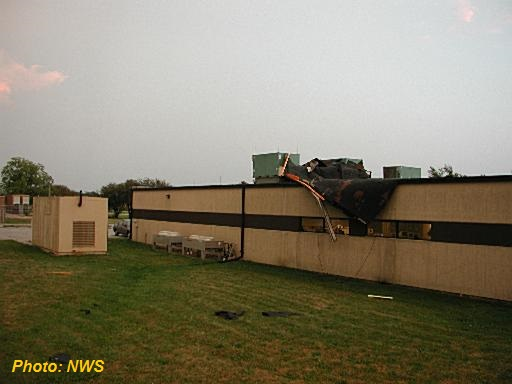
Spotters report estimated wind speeds and any visible damage. Since wind speed is difficult to measure directly, reports should include what the wind is doing—such as downed trees, broken branches, damaged roofs, or overturned objects. These details help meteorologists estimate wind intensity. When reporting, ensure to include whether wind speeds are measured with a device or estimated.
Flooding and heavy rainfall
Spotters report areas of flooding, including water covering roads, rising creeks, or water entering buildings. If possible, include depth estimates (for example, “water covering half the road” or “2 feet of standing water”). Never attempt to measure flooding in dangerous conditions.
Dense fog or freezing fog
Spotters report significantly reduced visibility, especially when it drops below a quarter mile. For freezing fog, note any ice accumulation on surfaces like trees, roads, or power lines, as this can create hazardous travel conditions.
Non-thunderstorm winds over 40 mph
Spotters report strong winds even when thunderstorms are not present. Similar to severe winds, include visible impacts such as swaying trees, debris blowing, or structural damage to help estimate wind speed.
A Day in the Life of a Storm Spotter
A typical day during severe weather season starts with checking forecasts and briefings. Reliable sources that Storm Spotters use are reports from The National Weather Service, Local stations like KWQC-TV6 First Alert Weather, and trusted local weather groups. For the Quad Cities area, I recommend the Muscatine Iowa Weather Storm Team Facebook Page.
…While apps like Apple Weather and AccuWeather can be useful for general forecasts, they may be less reliable during severe weather events. These apps rely heavily on automated models, which can struggle to capture fast-changing storm conditions. For the most accurate and timely information, storm spotters should refer to the National Weather Service, local meteorologists, and trusted real-time sources.
Some storm spotters also follow online meteorologists, like YouTuber Max Velocity, who breaks down severe weather patterns across the country.
After monitoring conditions, spotters observe storms safely and report what they see through phone calls, web reporting, the NWS Quad Cities Facebook Page, and X.
Why It Matters
Storm spotting isn’t just exciting; it plays a real role in public safety. By providing real-time information, storm spotters help meteorologists issue more accurate warnings, giving communities more time to prepare.
So the next time you watch Twisters and think about chasing storms, remember that you don’t have to be in a movie to be part of the action. You can start right here in the Quad Cities.


Comments