US Experiments: More Harm Than Good

For many years, experimentation has been the best way for scientists and scholars to learn information all around the world. Some of the most well-known experiments have happened outside of the United States, specifically in Germany during World War 2. Many of the experiments that took place in the United States were much worse and quickly covered up, with the government destroying documents and admitting much, much later that these things happened. One of the big ones took place under CIA supervision. Known as Project MKUltra, the CIA admitted they drugged US citizens and Canadian citizens without their knowledge and attempted to develop a way of mind control or even a truth serum. When it didn't go the way they planned, they destroyed all documents until later on, when they admitted doing so in court. As awful as MKUltra was, much worse has happened, and to this day, many don’t know about most of the experiments I'm going to talk about.

The Little Albert Experiment
The Little Albert Experiment took place in 1920, conducted by John B. Watson and Rosalie Rayner at Johns Hopkins University. The goal of the experiment was to see if you could instill fear of something specific into someone. But after concluding that with adults and their minds already having a set idea of what is scary and what is not, they decided they needed subjects that didn’t have this yet. A baby. They found a mother and her 9-month-old baby, “Albert,” who was reportedly a healthy and unemotional child. In the beginning, they introduced him to a series of small and friendly animals. Albert showed no fear of any of the animals and would even reach out to try to pet the animals. One thing he did show fear of was loud noises. When someone clapped loudly, he would cry. So what Watson did was he would pair the animals with the noise; he would show Albert a small white bunny, and at the same time strike a metal pole with a hammer behind Albert's head. Albert would break into tears, and after many trials over two days, he no longer needed the noise to be terrified of the animal. This would transfer to other small and white animals, as well as cotton and even Santa. Eventually, Albert's mother took him out of the program after two days, deciding it was wrong. Watson left Albert without any deconditioning, and though it is widely debated about Albert's true identity. Some believe he was a child by the name of Douglas Merritte who passed away five years later and spent his whole life afraid of anything small, fluffy, and white.
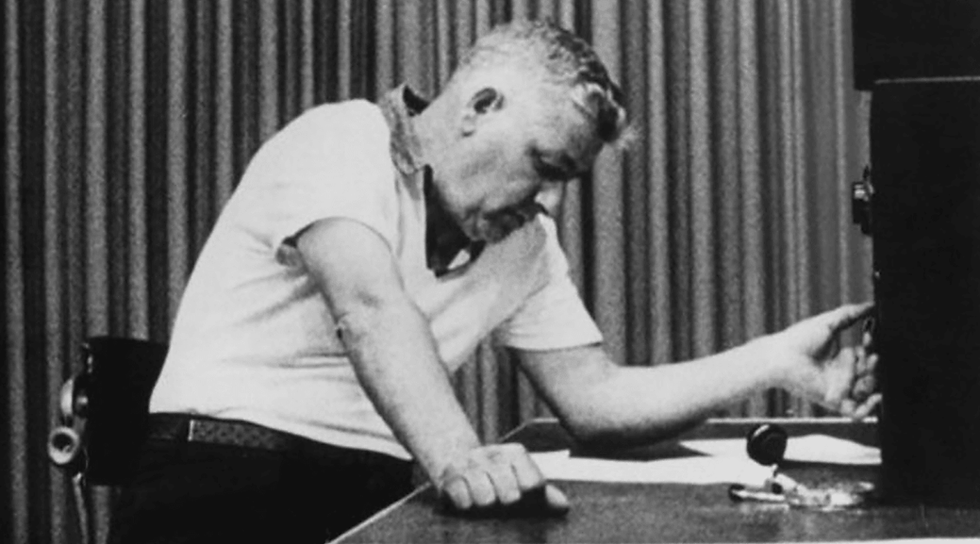
The Milgram Shock Experiment
The Milgram Shock Experiment took place in 1961-1962, under the supervision of Stanley Milgram at Yale University. The purpose of his experiment was to understand the behavior of individuals who commit immoral acts under authority. Specifically, in the context after WWII. In his experiment, many Nazis on trial all had the same reasoning. They were following orders. He conducted the experiment by offering volunteers money to be a teacher in an experiment they were told was to learn about the way individuals learned information. They were instructed to read a series of lists and words, have the learner, who was really an actor, repeat them back, and if they got them wrong, they were to deliver an increasing shock to someone attached to the machine. The shock would get higher and higher in voltage, and the actor would let out screams of pain. Near the end, when the voltage was as high as 450, the actor begged to stop. The volunteers would try not to continue, but when Milgram told them they must, it was said 65% delivered the shock, and the actor went quiet. If the shock had been real, it would have ended the actor's life.

The Stanford Prison Experiment
The Stanford Prison Experiment is, in a way, similar to the Milgram shock experiment. Taking place years later in 1971 at Stanford, run by Phillip Zimbardo, his goal was to understand why people in authoritarian positions are more likely to abuse their power. It was designed to be a two-week simulation taking place in the basement of the university. Phillip built a realistic jail set and rounded up a group of college-age volunteers to be the prisoners and the guards. Split into two groups, the guards were given whistles and dark mirrored glasses so the prisoners could not see their eyes. The prisoners were stripped of their identity and given the same prison-like outfit with an ID number. The first day of the experiment, the guards maintained the original respect of the prisoners, seeing them as fellow students who all went to the same school. Yet by the second day, the guards began to raise their voices and hit the bars when prisoners put their hands through them. By day six, the guards' abuse had gotten worse and worse every day. This involved physical abuse and even withholding food from the prisoners. At some point, the prisoners began to attempt to escape as if they really believed they were in prison. The experiment was cut short at day six, with Phillip strongly believing something terrible would have happened to one of the prisoners.
Many, including me, believe that these were common-sense experiments with results that could have been assumed; in the end, they would do more harm than good when testing.


Comments